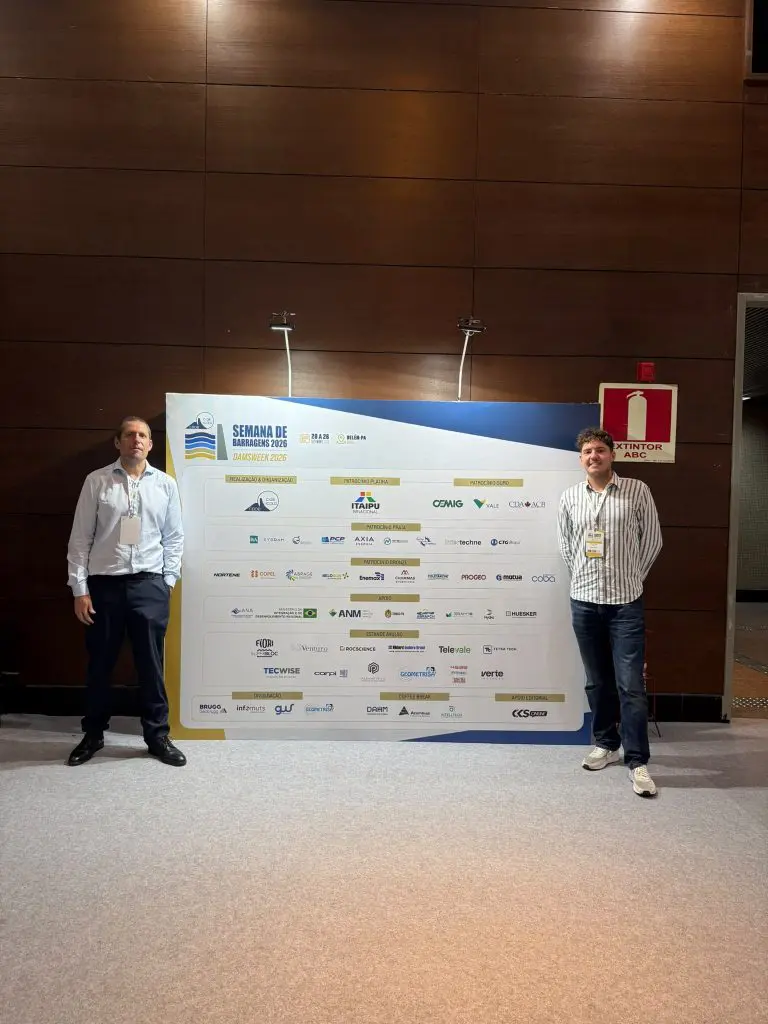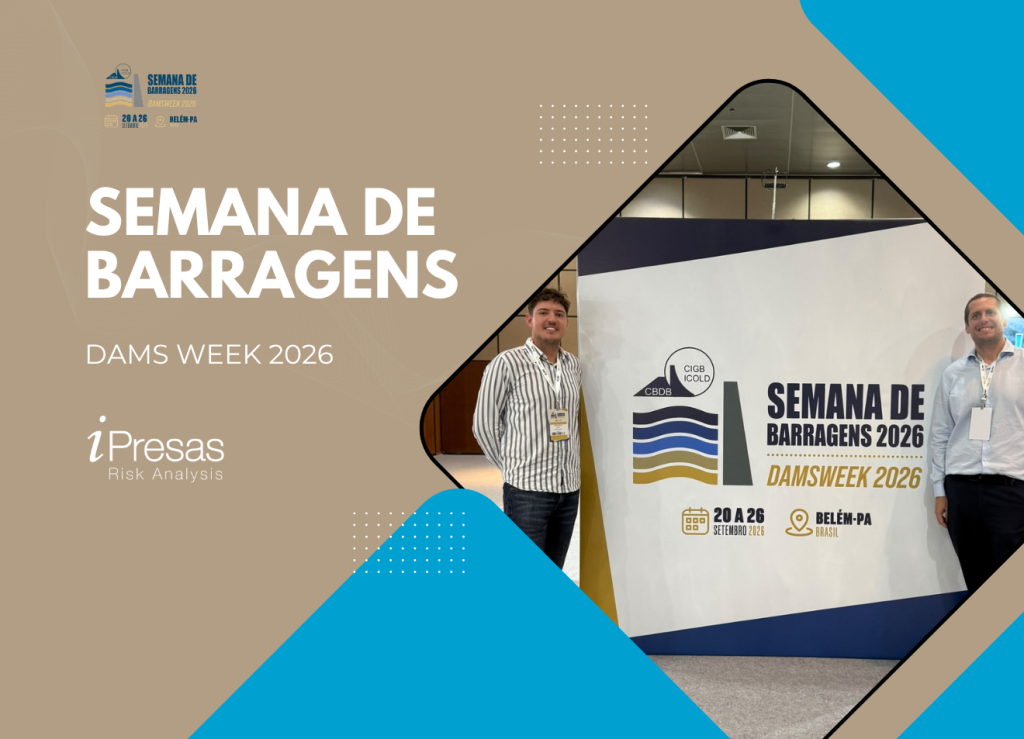
On 22 September, Adrián Morales Torres, Managing Partner at iPresas, and Marco Silva, Civil & Sales Engineer, participated in the I Simpósio sobre Grandes Estruturas Geotécnicas, held in Brazil. During the event, Adrián delivered two presentations on the application of risk analysis to the safety of conventional dams and tailings dams.
International experience in dam safety
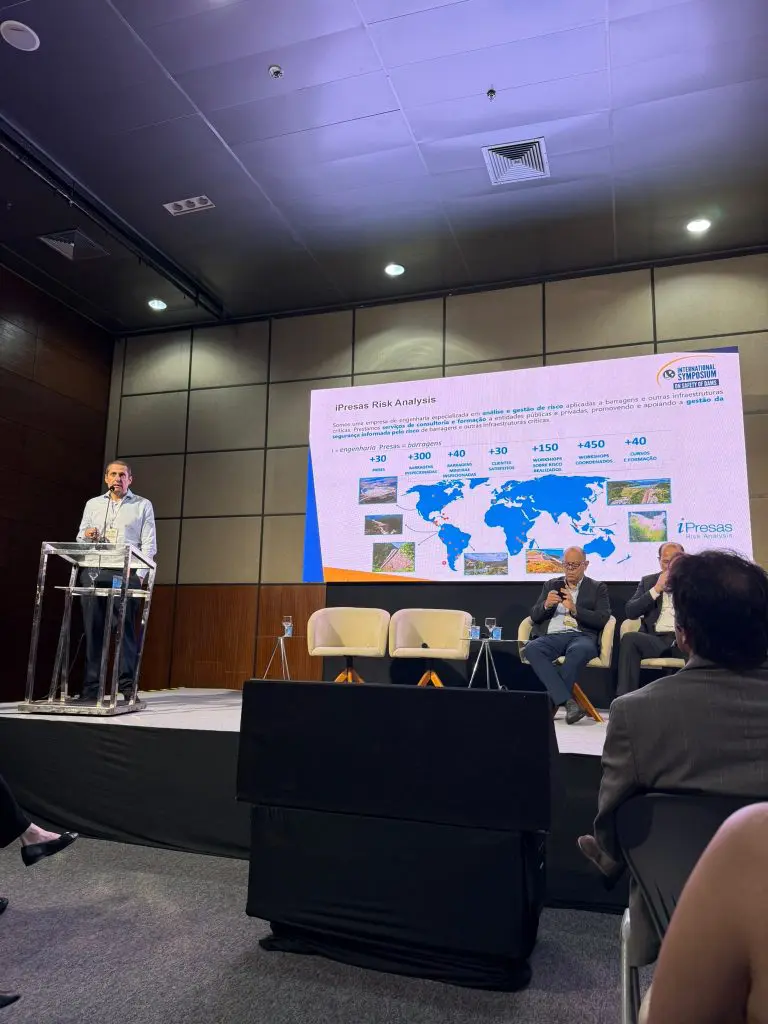
The first presentation, “How risk-based approaches improve dam safety: examples and lessons learnt worldwide”, brought together experiences from projects carried out in Brazil, Mozambique, Colombia and Spain. Through these examples, Adrián demonstrated how risk analysis helps identify the most relevant aspects of each dam’s safety and prioritise actions and investments on an informed basis.
The second presentation, “Application of risk methodologies to tailings dams: practical challenges and lessons learnt”, addressed the challenges of applying these tools to facilities that continually evolve. Key messages included the importance of integrating the knowledge of multidisciplinary teams, managing uncertainties and adapting the depth of the analysis to each facility’s needs.
Risk analysis to support decision-making
Both presentations focused on the practical value of these methodologies: turning technical information into decisions that help improve safety. Identifying potential failure modes and assessing their consequences enables managers to compare alternatives and determine appropriate risk reduction measures.
The presentations also highlighted the importance of keeping assessments up to date and incorporating risk analysis into routine infrastructure management. In this context, digital risk management platforms help track recommendations and plan actions, both for individual dams and portfolios of facilities.
The experiences presented in Brazil demonstrated that each facility requires an approach tailored to its conditions and the decisions its managers face. The challenge lies in translating analysis results into concrete actions and reviewing priorities as the infrastructure evolves.