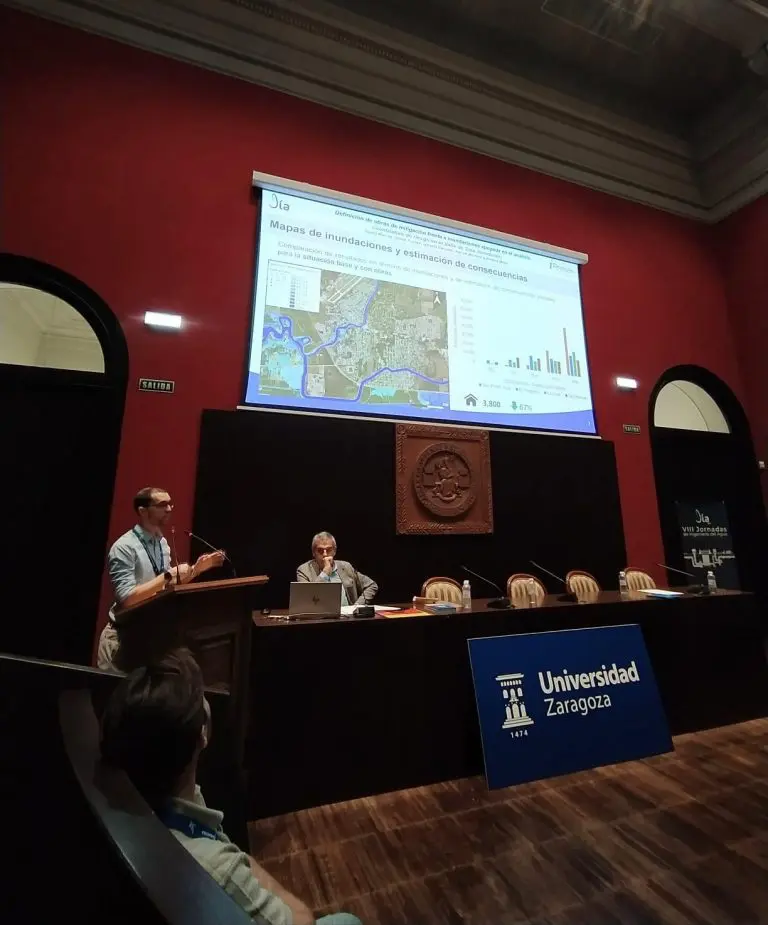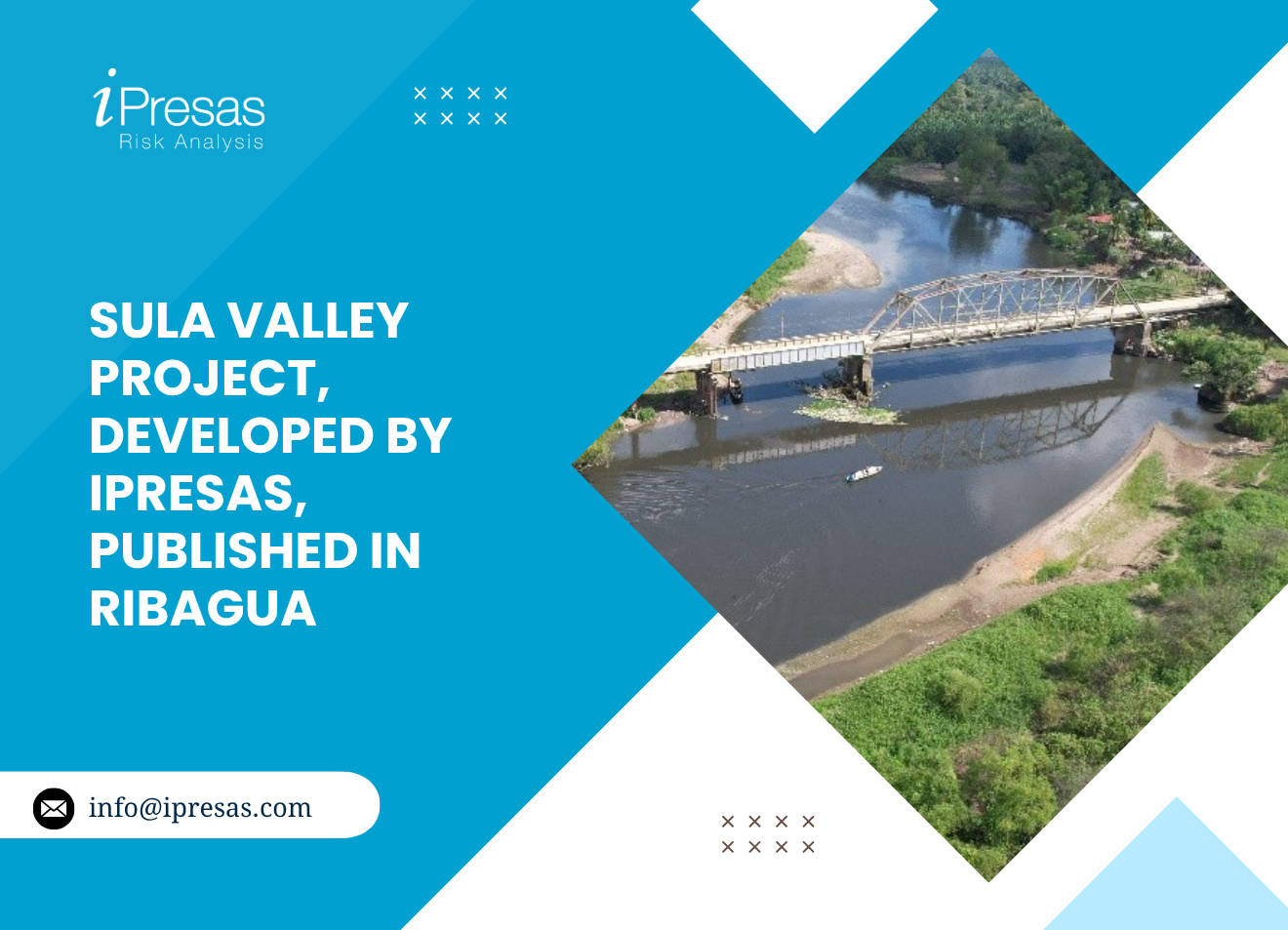
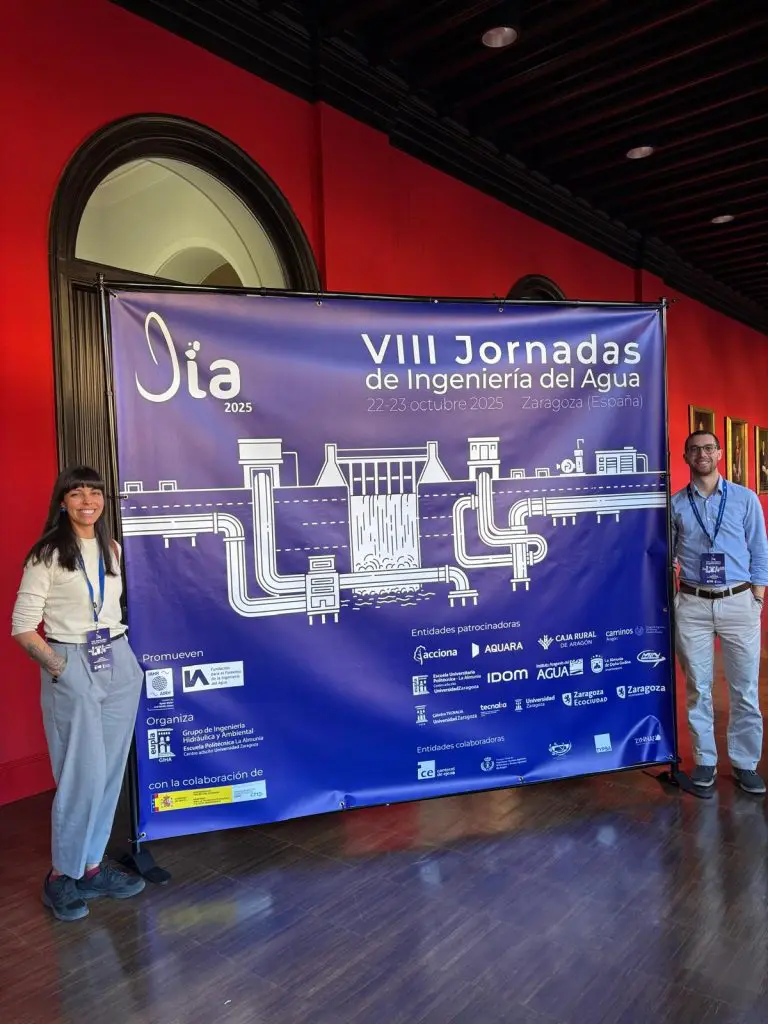
iPresas participated in the VIII Water Engineering Conference (JIA 2025), held in Zaragoza on 22–23 October, presenting the results of the project for defining flood mitigation works in the Sula Valley (Honduras). The work was promoted by the Honduran Secretariat of Infrastructure and Transport (SIT) and financed by the Inter-American Development Bank (IDB), with the aim of reducing disaster risk in one of the most exposed regions in Central America.
A key territory for Honduras
The Sula Valley is the economic engine of the country: it accounts for 60% of the national GDP and is home to 2.6 million people. However, its location and urban development make it particularly vulnerable to extreme hydrometeorological events, as demonstrated by Hurricanes Eta and Iota in 2020, which caused severe social and economic impacts.
This situation justified the implementation of an integrated risk management approach aimed at prioritising investments and strengthening territorial resilience.
Methodological approach based on disaster risk management
The project applied the Disaster and Climate Change Risk Assessment Methodology (MERDCC) developed by the IDB, combining qualitative and quantitative analysis. Key activities included:
- A multidisciplinary workshop with more than 40 specialists from Honduran institutions (CCIVS, COPECO, SEFIN, ENEE, CODEM, among others).
- Identification of 21 failure modes, many of them classified as High Risk.
- Development of hydrological and hydraulic models for different flow scenarios.
- Generation of flood maps and consequence assessments.
- Construction of a quantitative risk model to evaluate economic losses and risk to human life.
This approach made it possible to define an optimised portfolio of mitigation works and non-structural measures.
Results: risk reduction and economic feasibility
The comparison between the current situation and the scenario with mitigation works shows significant benefits:
the implementation of the works reduces current social and economic risk in the Valley by 35% and 13%, respectively. Even under climate change or population growth scenarios, the measures remain effective.
Moreover, the cost–benefit analysis confirmed the feasibility of the project
Beyond infrastructure: institutional and community strengthening
The project also included the design of a Disaster Risk Management Plan (PGRD), incorporating measures such as::
- Strengthening the Early Warning System.
- Community preparedness and response protocols.
- Basin governance and land-use planning.
- Promotion of resilient buildings.
Building resilience in Honduras
The presentation at the VIII Water Engineering Conference highlighted how risk-based decision-making enables the prioritisation of investments with real and sustainable social impact.