


The project was part of the Environmental Recovery Program, created by the city council and financed by the IDB. Its overall objective was to apply disaster risk analysis techniques to the proposed improvement operations in three of the urban basins selected within the sample, in order to ensure resilience to disasters in compliance with the IDB’s Environmental and Social Policy Framework (IDB, 2020).
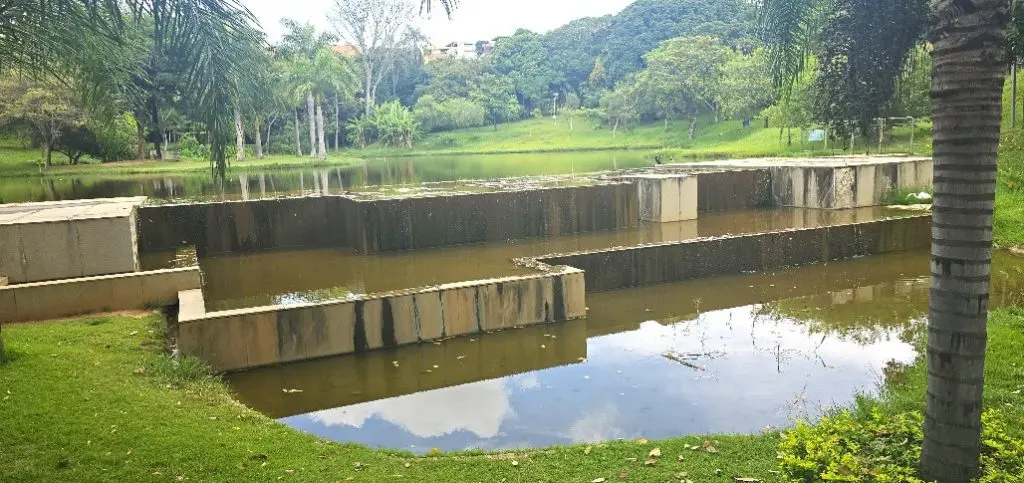
In the basins of the sample (Terra Vermelha – 3.4 km2, Embira – 4.2 km2 and Várzea de Palma – 2.1 km2) different flood risk mitigation measures have been proposed, including: the stabilization and lining of the canals, the improvement of urban microdrainage systems and sanitary sewerage, the implementation of linear parks around the riverbeds, as an environmental and urban solution, which includes retention dams to form flood buffer areas or lagoons. The phases executed to evaluate the project in terms of disaster risk are summarized below:
- Phase 1: the existing hazards in the study area (urban area of Belo-Horizonte) have been identified, as well as the frequency and magnitude of these threats.
- Phase 2: a qualitative risk analysis has been carried out for each proposed work based on the review of the existing information, the characteristics of the proposed projects and the technical visit to the study area.
- Phase 3: a quantitative risk analysis has been carried out by developing a risk model with the iPresas software (iPresas, 2022). The risk model has been supported by hydrological analyses (with climate change) and two-dimensional hydraulic modelling, for a total of 112 simulated scenarios between the three study basins for the return periods of 2, 5, 10, 25, 50, 100 and 500 years.


