


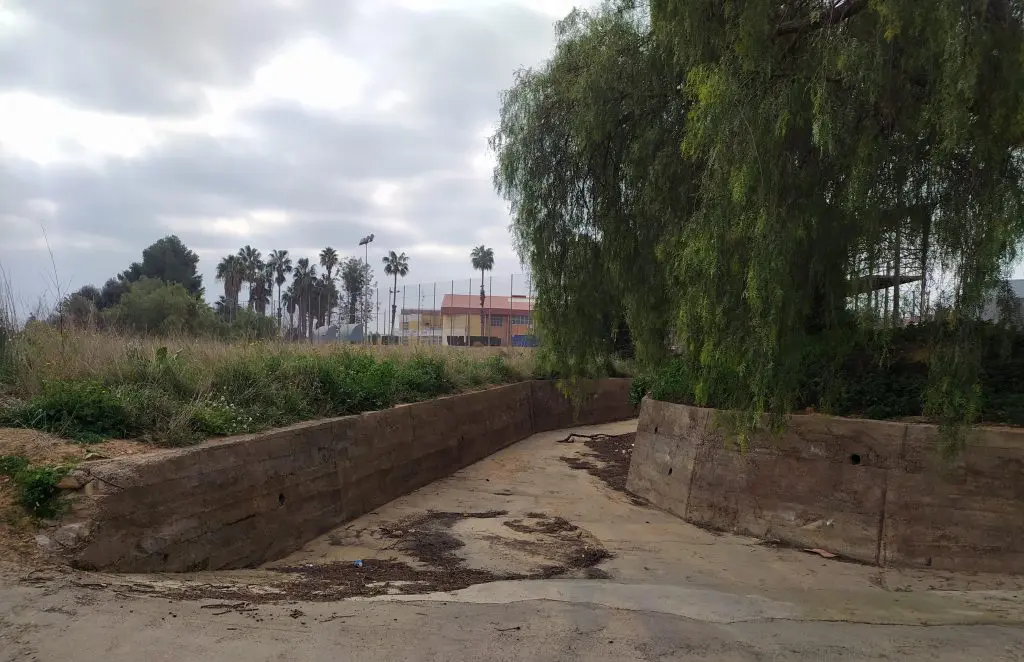
The project consisted of the study and analysis of the flooding situation of the urban center of the municipality of Benaguasil (Valencia) with respect to different hydrological scenarios, also considering the impact of the construction of the CV-50 and CV-375 roads on the behavior of the hydraulic system of the municipality during rainwater and river flooding events.
The study has included the identification of the basins that drain into the urban core of the municipality of Benaguasil, a general hydrological analysis and a two-dimensional hydraulic model of the system, covering the urban area of the municipality and the surrounding areas, for a wide range of flows and probabilities of recurrence in three types of scenarios
- Precipitation scenarios in the urban basin: these scenarios consider the runoff generated by extreme precipitation events associated with the return periods of 2.33, 5, 10, 25, 50, 100 and 500 years within the urban sub-basin area.
- AEMET Alert Scenarios: these scenarios transit the flows associated with the rainfall corresponding to the warning levels (yellow, orange and red) of the MeteoAlerta Plan (AEMET), both as direct precipitation in the urban sub-basin, and as inflow through the Benaguasil and Llíria ravines to the north of the urban centre.
- Turis critical precipitation scenario: represents the most critical scenario analysed, which corresponds to the assumption that the historical record rainfall recorded at the Turis station occurred in the study area, of the event that occurred in Valencia on 29 October 2024, both as direct precipitation in the urban sub-basin, and as an inflow through the Benaguasil and Llíria ravines to the north of the urban centre.
In this way, in addition to understanding the hydraulic operation in the study area for different conditions, the magnitude (extension, depth and speed) of the floods in the study area has been estimated and the flood hazard zoning of the municipality has been known.


