


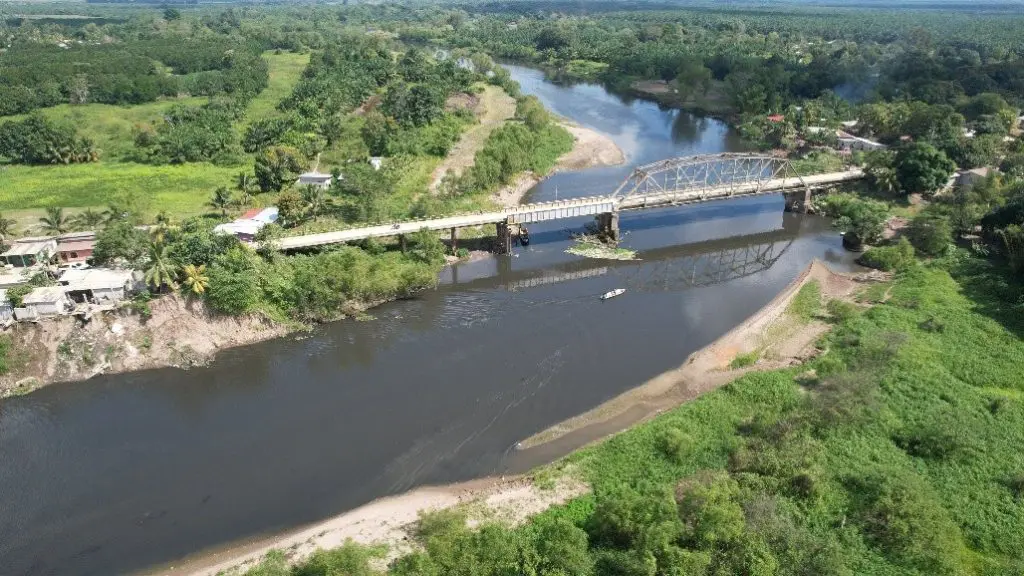
The project involved defining short-term definitive solutions to control and reduce the risk of flooding caused by extreme events in Valle de Sula, Honduras. Specifically, the focus was on mitigation in the main urban areas and critical infrastructure of Valle de Sula, such as San Pedro Sula, La Lima, El Progreso, and the Ramón Villeda Morales International Airport. The specific objectives of the consultancy were as follows:
- Update of the two-dimensional hydraulic modelling study of the system composed of the Ulúa and Chamelecón rivers in Valle de Sula, as well as the interconnected channels to natural watercourses and existing flood protection works.
- Threat analysis based on flood maps for current and future scenarios evaluated for the system, including results for water depth, velocity, arrival times, and duration of water coverage.
- Estimation of the social and economic consequences in the study area resulting from simulated floods in each scenario.
- Quantitative assessment of flood risk based on a risk model that integrates all analyzed information, combining hazard, exposure, and vulnerability results of the system.
- Cost-benefit analysis for the evaluation of alternatives and mitigation measures, to define the final solution and the optimal sequence of actions to minimize the risk.
Based on the study of the Ulúa and Chamelecón rivers and criteria of potential impact and technical feasibility, a prioritization of the works proposed by the Secretary of Infrastructure and Transport (SIT) was carried out. This prioritization evaluated the benefits and feasibility of the proposed works with the assistance of 2D hydraulic modelling and the assessment of avoided risk, along with corresponding cost-benefit analysis, which justified the proposed solution for implementation.


